
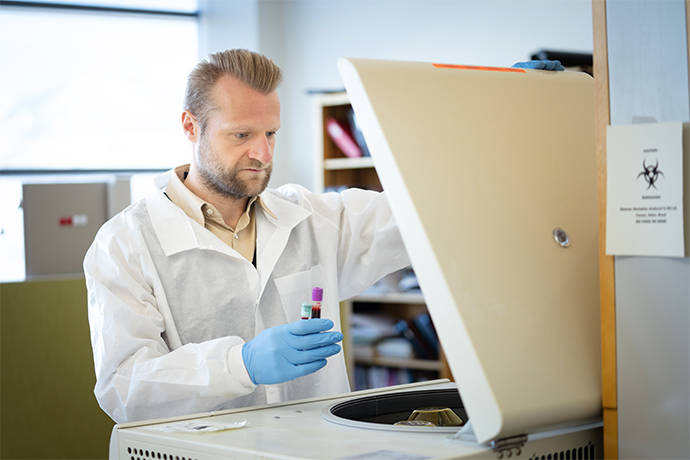
Research in the Van Vliet Lab is performed at the nexus of agricultural and human nutrition. We routinely collaborate with farmers, ecologists, and agricultural scientists to study critical linkages between sustainable agriculture, the nutrient density of food, and human health.
Currently, we are working on several large-scale projects to profile beef, bison, milk, blueberries, and other crops that were grown or produced using various production methods. We study whether more climate-friendly production practices, known as regenerative agriculture, also impact the nutritional quality of these foods and animal health. So far, we are seeing that regenerative agriculture can improve vitamins, minerals, and antioxidants in these foods. We are also performing the first ever randomized controlled clinical trials that studies human health responses to eating foods produced using regenerative agricultural practices to see if there are any appreciable effects on human health.
The lab is led by Dr. Stephan van Vliet. Before arriving at USU, Dr. van Vliet earned his PhD in Kinesiology and Community Health as an ESPEN Fellow from the University of Illinois at Urbana-Champaign. He received post-doctoral training at the Center for Human Nutrition at the Washington University in St Louis School of Medicine and the Duke Molecular Physiology Institute within the Duke University School of Medicine.
Nutrient Density Testing
Combining innovative methodologies with competitive pricing, we aim to deliver nutrient density testing services tailored to your quality assurance and research needs. Our testing is ideal for: consumers, farmers, producers, researchers, and brands seeking a cost-effective analysis of high-impact nutritional markers.
Selected Recent Research Projects
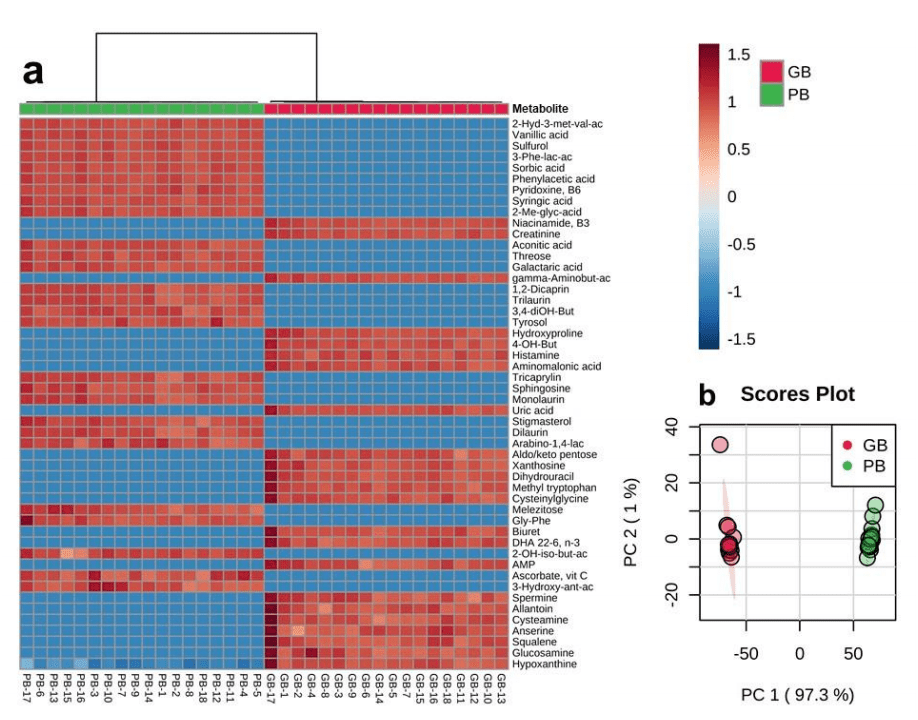
Nutriomics Comparison of Beef and Plant-Based Alternative
We used untargeted metabolomics to provide an in-depth comparison of the nutrient profiles of grass-fed ground beef and a market-leading plant-based meat alternative. Metabolomics revealed a 90% difference in nutritional profiles beef and a popular plant-based meat, many of which can have important consumer health implications. This information could not be determined from their Nutrition Facts, which suggests nutritional similarity. Our findings indicate that beef and a popular plant-based meat should not be viewed as nutritionally interchangeable, but as complementary in terms of provided nutritional entities.
Effect of Obesity on Insulin Kinetics:
We compared insulin kinetics before and after glucose ingestion in lean healthy people and people with obesity who were matched on multiorgan insulin sensitivity as assessed by using a two-stage hyperinsulinemic-euglycemic pancreatic clamp procedure in conjunction with glucose and palmitate tracer infusions and positron emission tomography. We also evaluated the effect of diet-induced weight loss on insulin secretion in people with obesity who did not improve insulin sensitivity despite marked (∼20%) weight loss. Basal and postprandial insulin secretion rates were >50% greater in people with obesity than lean people even though insulin sensitivity was not different between groups. Weight loss in people with obesity decreased insulin secretion by 35% even though insulin sensitivity did not change. These results demonstrate that increased insulin secretion in people with obesity is associated with excess adiposity itself and is not simply a compensatory response to insulin resistance.
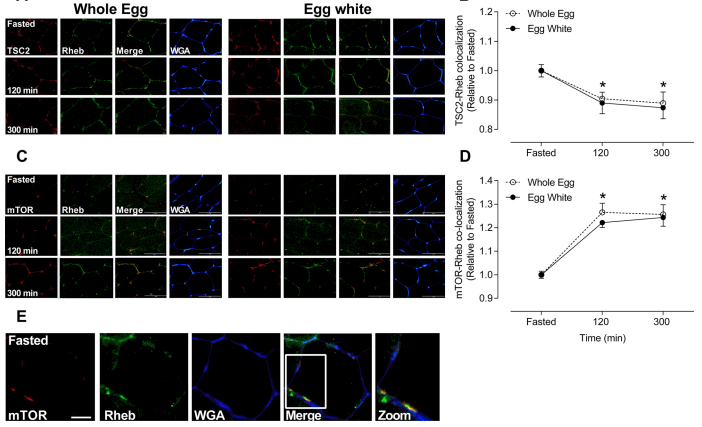
Effects of the Whole Food Matrix on Muscle Protein Metabolism:
This series of projects evaluated whole body and tissue anabolic responses to protein-rich whole food ingestion using contemporary stable isotope amino acid tracer methodology. Prior to my work, it was widely assumed that the tissue anabolic response to a meal was entirely due to its protein content; however, the results from my studies found an important role for secondary compounds (e.g., vitamins, minerals, fatty acids and other bioactive compounds) present in the whole food matrix of nutrient-dense foods such as eggs (Van Vliet et al. 2017), meat (Burd et al. 2015), and milk (Van Vliet et al. 2019) in stimulating muscle protein synthesis.
 The Van Vliet Lab